OpenAI’s New “Code Red” Strategy: The Secret Model Developed to Challenge Google’s AI Dominance

- Artificial intelligence has never moved this fast
- the competition at the top has never been this intense. Over the past year
- Google has been accelerating aggressively—launching new Gemini versions
- improving multimodal understanding
- pushing research-based updates at an unprecedented pace. Now
- for the first time since ChatGPT’s release
- Google appears to be closing the gap.
OpenAI’s response? A full-scale pivot internally known as “Code Red.”
Reports from multiple sources indicate that OpenAI has begun developing a new, highly capable model—codenamed “Garlic”—designed specifically to outperform Google’s latest AI systems. While OpenAI has not officially confirmed the model’s details, insiders across the industry say this is the company’s most strategically important model since GPT-4.
But what exactly is happening behind the scenes? And why has this rivalry reached a breaking point in 2025?
- This article breaks down the emerging AI showdown
- the technology behind OpenAI’s new model
- what this could mean for the future of artificial intelligence.
Why OpenAI Declared a “Code Red”
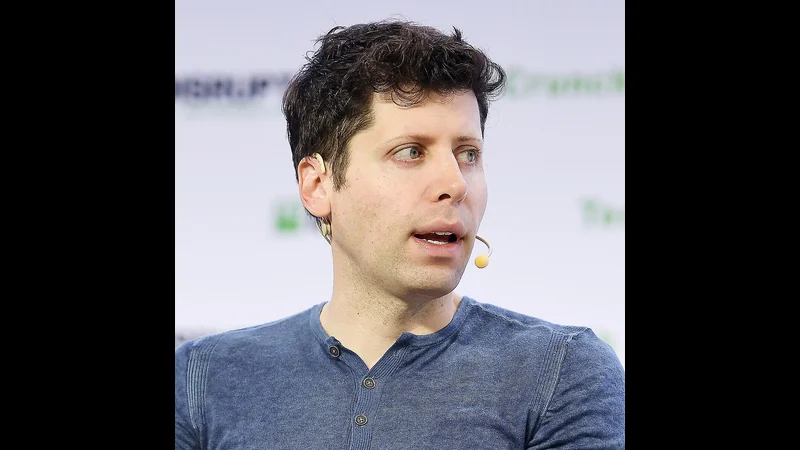
When Sam Altman uses the term “Code Red,” it isn’t marketing—it’s a strategic alarm bell.
According to credible reports from The Verge, Financial Times, and The Information, OpenAI leadership warned employees that Google’s rapid progress with Gemini—and its deep integration into Search, Android, and Workspace—gives Google an unmatched scalability advantage.
In other words:
👉 Google has distribution. OpenAI has innovation.
Now Google is catching up on innovation, and OpenAI must catch up on distribution.
This shift has created intense pressure inside OpenAI. Several experimental or commercial projects were paused so the company could redirect resources toward one mission:
Build a model undeniably better than Google’s best.
This is where Project Garlic enters the picture.
What Is OpenAI’s “Garlic” Model?
While details are limited, leaks describe Garlic as:
A next-generation large language model (LLM)
Built to improve:
reasoning
code generation
long-context understanding
structured problem solving
multimodal alignment
A direct competitor to Google Gemini 3
Garlic specifically targets Google’s strengths:
web-scale understanding
seamless Android ecosystem support
multimodal search
high-precision coding tasks
Designed for sustained performance—not just benchmarks
The insider reports emphasize something important:
Garlic is optimized for real-world usage, not test performance alone.
If true, this marks a major philosophical change inside OpenAI.
A model trained with efficiency breakthroughs
OpenAI researchers have been experimenting with:
sparse expert routing
memory-augmented transformers
scalable inference optimizations
more energy-efficient training loops
These may be part of Garlic’s architecture.
Why OpenAI Needed a New Model
OpenAI’s existing lineup—ChatGPT, GPT-4, GPT-4o and its variants—remains strong. But the competitive landscape has shifted dramatically:
Google launched several new Gemini upgrades
Some outperform OpenAI’s models in:
logic tasks
tool-use benchmarks
live reasoning
high-resolution multimodal tasks
Anthropic released Claude 3.5
A surprisingly strong contender that shook the market.
Meta open-sourced powerful Llama versions
Accelerating innovation across startups.
Microsoft is pushing xAI research + Copilot ecosystem
Integrating models into Windows and Office.
The message was clear:
Standing still means falling behind.
OpenAI’s new model is not optional—it is necessary.
What Makes This Rivalry So Important?
This is not simply a fight over market share.
It’s a race to define the next 10 years of artificial intelligence.
The winner influences global AI standards
- Safety policies
- developer tools
- ecosystem norms often follow the leader.
The competition will shape how billions use AI
- Google has hardware, phones, browsers, and Search.
- OpenAI has ChatGPT and innovation speed.
The world shifts toward AI-first computing
Whichever company dominates this wave may shape:
education
productivity
cybersecurity
creative work
digital assistants
scientific discovery
The economic stakes are enormous
Industry analysts estimate the next-gen AI market exceeds $1 trillion this decade.
How OpenAI’s Strategy Is Changing
Sources say OpenAI has adopted three urgent priorities:
Build a more powerful general model (Garlic)
This is the company’s top focus.
Strengthen product ecosystem
- ChatGPT
- API tools
- enterprise services will be unified more tightly.
Increase model speed + cost efficiency
To compete at Google scale, inference costs must drop.
Introduce “AI Agents” capable of multi-step tasks
This is considered OpenAI’s next big unlock.
What Experts Believe Will Happen Next
Industry researchers expect:
Faster upgrade cycles for both Google and OpenAI
Instead of annual releases, we may see quarterly or continuous updates.
Rapid multimodal evolution
- Image
- audio
- video
- code
- live reasoning will merge into single agents.
Integration wars
Where Google inserts Gemini across Search/Android,
OpenAI will push Garlic across ChatGPT + Microsoft ecosystems.
Regulation pressure
As models become more powerful, governments will begin demanding transparency.
A possible “AI Cold War” dynamic
Where research secrecy increases again to gain competitive advantage.
- Comparison Table: OpenAI vs Google (2025 AI Battle)
- Category Google (Gemini) OpenAI (Garlic + 4o)
- Ecosystem Huge (Search, Android, YouTube) Strong but smaller
- Speed of deployment Extremely fast Improving
- Research depth World-class World-class
- Multimodal skills Leading Improving rapidly
- Product focus Integration Innovation
- Model philosophy Scale + infrastructure Intelligence + usability
Both companies excel differently—and that’s what makes the rivalry historic.
What This Means for Users
Whether you use AI for work, creativity, education, or daily tasks, this competition directly benefits you:
✔ Faster models
✔ Cheaper access
✔ Higher accuracy
✔ More useful assistants
✔ Better coding tools
✔ Stronger safety layers
Innovation accelerates when giants compete.
Summary (Key Takeaways)
OpenAI is developing a new model codenamed Garlic to challenge Google’s growing AI dominance.
Sam Altman initiated a “Code Red” internal shift to prioritize frontier model development.
- Garlic is expected to outperform Gemini in reasoning
- coding
- hybrid multimodal tasks.
The rivalry marks the most intense AI competition since ChatGPT’s release.
- Users will benefit from faster innovation
- cheaper models
- more powerful AI tools.
External Sources (Working Links)
The Verge – OpenAI “Code Red” Report
Financial Times – OpenAI Strategic Shift