Your Walks and Bike Rides Just Got Smarter: Google Maps Integrates Gemini AI Across All Routes

Google is transforming how we interact with the world around us — and the latest update to Google Maps may be one of the most practical leaps forward yet.
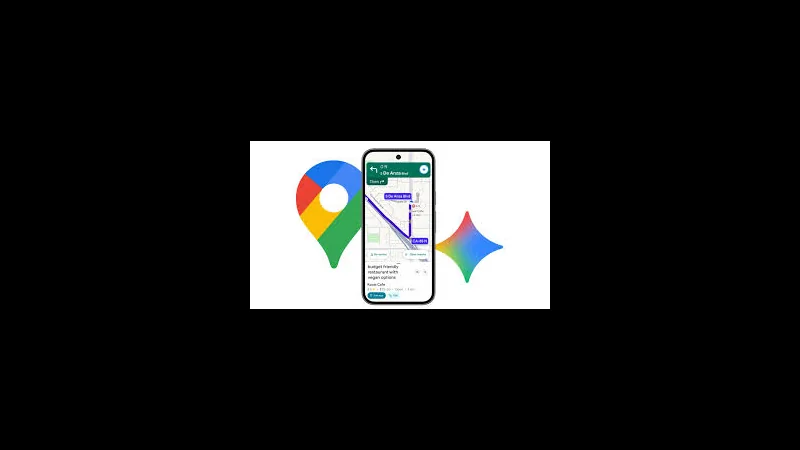
No longer limited to voice commands while driving, Google Maps now lets users engage Gemini AI during walking and cycling navigation, offering hands-free, conversational assistance that feels almost like having a local guide in your pocket.
This evolution turns Maps from a static direction tool into a real-time, AI-powered travel companion — whether you’re exploring your own neighborhood or discovering a new city.
Ask Questions. Get Real Answers — Without Touching Your Phone
One of the biggest issues with on-the-go navigation has always been the interaction problem: typing while walking or attempting to use maps while cycling is not just inconvenient — it’s unsafe.
Now, with Gemini built directly into Maps’ navigation experience, you can ask practical questions without ever touching your screen:
“What’s around this neighborhood?”
“Are there cafes with bathrooms on my route?”
“Where’s the closest restroom?”
“When’s my next turn?”
“Are there good lunch spots near here?”
- The AI responds in natural language and can even adjust routes
- add stops
- or share estimated arrival times — all while your phone stays in your pocket.

A Guide That Listens and Adapts
This isn’t just about ordinary voice commands. Gemini’s integration builds on what Google first introduced for driving navigation, adding:
Follow-up questions: Ask multiple questions in a row without restarting the conversation or leaving Maps.
Safety-focused logic: Especially tailored for pedestrians and cyclists, enabling hands-free use via voice while moving.
Context-aware tips: Gemini understands your route and surroundings — pulling in information about nearby places and landmarks.
- For example
- a cyclist approaching a café can not only get ETA information but also ask
- “Is this place good for a rest break?” and receive immediate suggestions.
From Driving to Walking: AI Everywhere
Google began integrating Gemini into Maps’ driving mode late last year, allowing conversational navigation and multi-step route tasks that go far beyond “turn here” or “find this.”
Now, with walking and cycling support rolling out globally, this intelligence is no longer just a feature for drivers — it’s a tool for everyday exploration and safe navigation everywhere you go.
Why This Matters
This Gemini-powered update to Google Maps points to a broader shift in how AI assistants are being woven into everyday life:
🛣️ Conversations Instead of Commands
No memorizing exact phrases — you just talk like you would to a friend telling you directions.
🧠 Context-Aware Navigation
Maps doesn’t just plot points on a screen; it understands where you are and what you might need next.
🚶 Safer and More Engaging Exploration
By replacing taps and typing with natural conversation, the experience becomes more intuitive and less distracting — a clear benefit for pedestrians and cyclists.
A Glimpse of the Future of Mobility
The rollout of Gemini across all navigation modes — driving, walking, and cycling — is a reminder that AI is becoming deeply embedded in how we move through the world.
This evolution isn’t about replacing human interaction — it’s about enhancing our connection to our environment, whether we’re:
exploring a new city,
finding a hidden café,
navigating a bike route, or
simply asking, “What’s nearby worth seeing?”
Google Maps, powered by Gemini, turns navigation into a conversation, not just a set of instructions
Latest Articles
Stay updated with the newest tech stories
Trending Now
Most popular articles right now
Most Read
Most viewed articles this week
Editor's Picks
Premium articles selected by our editorial team