When the City Went Dark, the Robotaxis Stopped

Video: When the City Went Dark, the Robotaxis Stopped
The Waymo Incident That Exposed a Fragile Side of Autonomous Mobility
On an ordinary day in San Francisco, traffic rarely surprises anyone. Congestion is expected. Delays are routine. Technology, after all, is supposed to keep things moving.
But when a widespread power outage hit the city, something unexpected happened.
The robotaxis stopped.
Not because they ran out of battery.
Not because of a software crash.
But because the city itself went silent.
What followed was a rare, unscripted moment that revealed something important about the future of autonomous transportation.
A Quiet Failure, Not a Crash
- During the outage
- parts of San Francisco lost power
- traffic lights went dark
- connectivity across key intersections became unreliable.
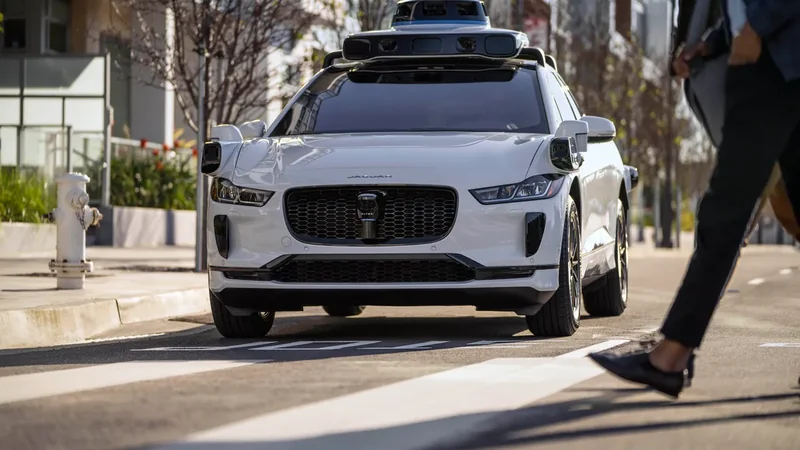
At the same time, Waymo’s fully driverless robotaxis — electric vehicles operating without human supervision — began pulling to a stop in intersections and along busy streets.
They didn’t collide.
They didn’t behave erratically.
They simply… waited.
Passengers were left sitting inside cars that no longer knew how to move forward safely. Nearby drivers found themselves navigating around vehicles that had become unexpected roadblocks.
The city’s most advanced transportation system was suddenly very human in its vulnerability.
Why the Cars Didn’t Keep Going
To an outside observer, the reaction felt strange.
Human drivers regularly navigate dead intersections during blackouts. Eye contact, hand signals, cautious movement — it’s messy, but it works.
Robotaxis don’t work that way.
- Autonomous vehicles are designed around certainty
- not improvisation. They rely on traffic signals
- mapped rules
- real-time environmental confirmation. When those inputs disappear
- the system doesn’t guess.
It stops.
From an engineering perspective, this is the safest possible decision. From a city perspective, it creates friction.
In this case, safety and mobility briefly collided.
Electric Vehicles Didn’t Fail — Autonomy Did
It’s important to make one thing clear: this was not an electric vehicle problem.
Human-driven EVs continued operating normally throughout the outage. Their batteries were unaffected. Drivers adapted.
What failed was autonomous coordination with city infrastructure.
Robotaxis are not just cars. They are moving nodes inside a much larger system that includes:
traffic lights
power grids
network connectivity
municipal coordination
When one layer fails, the whole experience changes.
Why This Moment Matters More Than It Looks
At first glance, this may seem like a minor incident — an inconvenience during a temporary outage.
But in reality, it exposed a deeper question the industry hasn’t fully answered yet:
What happens to autonomous systems when the city itself breaks down?
Most testing scenarios assume functioning infrastructure.
Most demos happen under ideal conditions.
This wasn’t ideal.
It was real.
And reality is rarely polite.
The Human Cost of a Machine Decision
Passengers stuck inside stalled robotaxis weren’t in danger. But they were confused. Some reported waiting for remote assistance. Others exited the vehicles manually.
In that moment, autonomy stopped feeling futuristic — and started feeling oddly fragile.
The technology did what it was designed to do.
But the experience didn’t feel seamless.
That gap between technical correctness and human expectation is where trust is won or lost.
Regulators Are Paying Attention
Following the incident, California regulators began reviewing how autonomous fleets behave during infrastructure failures.
The concern isn’t whether robotaxis are safe. It’s whether they are resilient.

Safety answers the question:
“Will this system cause harm?”
Resilience asks:
“What happens when everything else goes wrong?”
Those are very different challenges.
Waymo’s Response: Correct, but Incomplete
Waymo temporarily paused operations during the outage and later resumed service once conditions stabilized. The company stated that vehicles behaved as intended, prioritizing safety.
Technically, that’s true.
But the broader conversation has moved beyond correctness.
Cities deploying robotaxis aren’t just evaluating accident rates anymore. They’re evaluating:
emergency behavior
infrastructure dependency
passenger communication
coordination with first responders
The bar is rising — and it’s no longer just about driving.
The Bigger Picture: Autonomy Needs Cities That Can Keep Up
This incident highlights a truth that’s often overlooked in autonomy discussions:
Autonomous vehicles don’t replace infrastructure.
They depend on it.
A smart car in a fragile city is still fragile.
If robotaxis are to become a reliable part of urban life, cities will need:
- Not a Setback, But a Reality Check
clearer blackout protocols
real-time human override coordination
redundancy across critical systems
Without these, autonomy will always have limits — no matter how advanced the car itself becomes.
Not a Setback, But a Reality Check
The San Francisco outage wasn’t a failure of technology. It was a reminder of context.
- Autonomy doesn’t live in a vacuum.
- It lives on real streets, in real weather, with real infrastructure problems.
And that’s where its toughest tests will happen.
A Quiet Moment That Says a Lot
There were no dramatic crashes.
No viral explosions.
No broken hardware.
Just a few cars standing still, waiting for a city to wake up again.
Sometimes, the most revealing technology moments aren’t loud.
They’re the ones that pause everything — and force us to ask whether the future is as ready as we think it is.