How AR and VR Are Changing Business

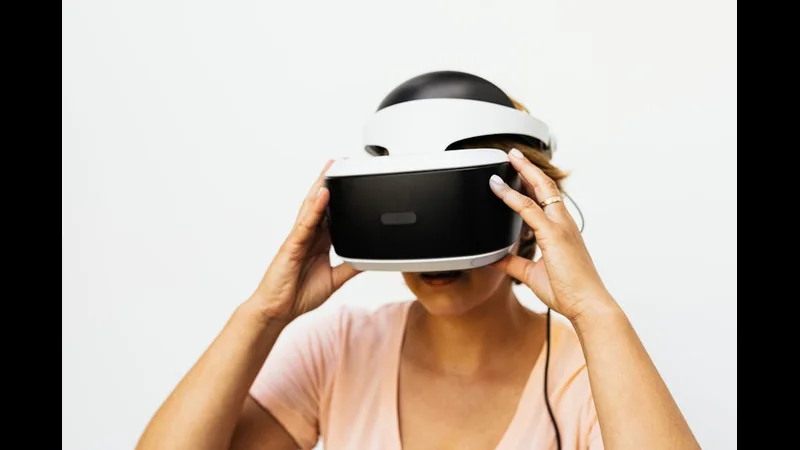
Augmented reality (AR) and virtual reality (VR) have moved well beyond experimental technology demos and gaming novelties. In today’s business environment, they are becoming practical tools that reshape how companies design products, train employees, engage customers, and make strategic decisions. What makes AR and VR especially powerful is not just their technical sophistication, but their ability to translate complex information into human experience. By placing people inside data, simulations, and digital environments, immersive technologies are changing how businesses think, learn, and operate.
At a fundamental level, AR and VR address a long-standing limitation of digital tools: the gap between abstract information and human intuition. Traditional dashboards, spreadsheets, and 2D interfaces require interpretation. Immersive environments, by contrast, allow users to perceive information spatially. Academic research from leading universities shows that spatial interaction improves comprehension, memory retention, and decision-making. For businesses, this means fewer misunderstandings, faster learning curves, and more confident execution.
One of the most immediate impacts of AR and VR can be seen in employee training and workforce development. Training has historically been expensive, time-consuming, and sometimes risky—especially in industries such as manufacturing, healthcare, aviation, and energy. VR simulations allow employees to practice complex or dangerous tasks in a safe, controlled environment. Medical professionals can rehearse surgeries, engineers can troubleshoot machinery, and emergency responders can simulate crisis scenarios without real-world consequences. Government workforce research indicates that immersive training significantly improves skill retention while reducing training costs and accidents.
AR, on the other hand, excels at real-time assistance. Through smart glasses or mobile devices, AR overlays digital instructions, diagrams, or alerts onto physical environments. In industrial settings, technicians can see step-by-step repair guidance while working hands-free. In logistics, warehouse staff receive visual picking instructions that reduce errors and speed fulfillment. Studies conducted by public research institutions show that AR-assisted workflows increase productivity and reduce operational mistakes, particularly in complex manual tasks.
Product design and development is another area undergoing rapid transformation. Traditionally, prototypes were expensive to build and slow to iterate. VR allows designers, engineers, and stakeholders to walk through virtual prototypes at full scale before anything is manufactured. Design flaws become immediately visible, collaboration improves, and iteration cycles shorten dramatically. Universities studying design cognition note that immersive prototyping enhances creative problem-solving by allowing teams to experience products from the user’s perspective early in the development process.
Customer experience has also been redefined by AR and VR. Retailers use AR to let customers visualize furniture in their homes, try on clothing virtually, or preview products in real-world contexts. VR enables immersive brand experiences, virtual showrooms, and interactive demonstrations that go far beyond traditional advertising. Government commerce research highlights that immersive customer experiences increase engagement, reduce return rates, and strengthen brand trust. For consumers, these tools reduce uncertainty and restore a sense of confidence in digital purchasing decisions.
In the real estate and construction sectors, immersive technologies have become especially valuable. VR property tours allow buyers and investors to explore spaces remotely, saving time and reducing geographic barriers. AR supports on-site construction by overlaying architectural plans onto physical spaces, helping teams align execution with design intent. Academic studies in built-environment research emphasize that these tools reduce costly errors and improve coordination across stakeholders.

Remote collaboration is another business function being reshaped. While video conferencing connected teams across distance, it failed to replicate spatial presence. VR collaboration environments allow distributed teams to meet in shared virtual spaces, interact with 3D models, and communicate with natural gestures. Research from human–computer interaction labs shows that immersive collaboration improves engagement and reduces the cognitive fatigue associated with traditional remote meetings. For global organizations, this represents a meaningful step toward more human-centered remote work.
AR and VR are also influencing data analysis and decision-making. Complex datasets—such as supply chain flows, urban infrastructure models, or financial simulations—can be visualized in three dimensions, revealing patterns that are difficult to detect on flat screens. Universities researching data visualization consistently report that immersive analytics improve insight discovery and strategic reasoning. For executives and analysts, this means faster understanding and more informed choices.
Despite these advantages, AR and VR adoption comes with challenges. Hardware costs, user comfort, integration complexity, and content development remain barriers. There are also important considerations around ergonomics, accessibility, and data privacy. Government technology standards organizations stress the need for interoperability, security frameworks, and ethical design principles as immersive systems scale. Businesses that succeed with AR and VR tend to start with clear use cases, pilot programs, and measurable outcomes rather than broad, unfocused deployments.
Another critical factor is cultural readiness. Immersive technologies change how people work, learn, and interact. Successful implementation requires change management, user training, and leadership support. Academic research on technology adoption highlights that the greatest returns occur when immersive tools are aligned with real human needs rather than introduced for novelty. When employees see tangible value—reduced friction, clearer understanding, safer environments—acceptance follows naturally.
Looking ahead, the business impact of AR and VR is expected to grow as hardware becomes lighter, more affordable, and more integrated with everyday devices. Advances in network infrastructure and cloud rendering will further reduce technical barriers. As immersive technologies blend with artificial intelligence and real-time data systems, businesses will gain the ability to simulate futures, test strategies, and train people at unprecedented scale.
Ultimately, AR and VR are changing business by making work more intuitive, learning more experiential, and decisions more grounded in understanding rather than abstraction. They bridge the gap between digital systems and human perception. In doing so, they redefine productivity not as speed alone, but as clarity, confidence, and connection. As organizations continue navigating complex digital transformation, immersive technologies are emerging not as optional enhancements, but as powerful tools for building more adaptive, human-centered enterprises.
- External Authoritative Sources
- National Institute of Standards and Technology (NIST) – https://www.nist.gov
U.S. Department of Labor – https://www.dol.gov
MIT Media Lab – https://www.media.mit.edu
Stanford Virtual Human Interaction Lab – https://vhil.stanford.edu
FAQ
What is the difference between AR and VR in business?
AR overlays digital information onto the real world, while VR creates fully immersive virtual environments.
Which industries benefit most from AR and VR?
Manufacturing, healthcare, retail, real estate, education, logistics, and design-driven industries see strong impact.
Are AR and VR expensive to implement?
Costs are decreasing, and many businesses start with targeted pilots that deliver measurable ROI.
Do immersive technologies improve employee training?
Yes. Research shows higher retention, improved safety, and faster skill acquisition compared to traditional methods.
Will AR and VR replace traditional work tools?
They are more likely to complement existing tools by enhancing understanding and interaction.
Conclusion
AR and VR are transforming business by turning information into experience. From training and design to collaboration and customer engagement, immersive technologies help organizations operate with greater clarity and confidence. Their true value lies not in novelty, but in their ability to align digital complexity with human intuition. As research institutions and government bodies continue refining standards and best practices, AR and VR are becoming essential components of a modern, resilient, and human-centered business strategy.