How to Improve Your Gaming Skills Fast

Improving gaming skills is often portrayed as a matter of raw talent or endless hours of play. In reality, rapid improvement comes from how you practice, not how long you play. High-performing gamers—whether casual climbers in ranked ladders or professional esports athletes—follow structured, deliberate methods rooted in cognitive science, motor learning, and performance optimization. Skill growth is not random; it is trainable, measurable, and accelerable.
This article explains how to improve your gaming skills fast by breaking down the most effective strategies used by top players across genres, supported by research from neuroscience, human–computer interaction, and competitive performance studies.
Why Most Players Improve Slowly
Many gamers plateau because they rely on passive repetition. Playing match after match without feedback reinforces existing habits—good and bad. While experience matters, unstructured play often leads to diminishing returns.
Common reasons for slow improvement include:
- Practicing without clear goals
- Repeating the same mistakes unconsciously
- Playing fatigued or distracted
- Focusing on results instead of fundamentals
- Ignoring mechanics, positioning, and decision-making
According to Stanford’s Learning Sciences research (Kaynak: https://stanford.edu
), skill acquisition accelerates only when practice is intentional and feedback-driven. Simply “playing more” is one of the least efficient ways to get better.
Step One: Identify the Skill That Actually Limits You
Fast improvement starts with diagnosis. Most players try to improve everything at once, which slows progress. High-level players isolate weaknesses and target them directly.
Key performance areas to evaluate:
- Mechanical execution (aim, timing, inputs)
- Game knowledge (maps, systems, meta)
- Decision-making (when to fight, retreat, rotate)
- Awareness (positioning, cooldown tracking, vision)
- Mental consistency (tilt, focus, confidence)
For example, losing gunfights may not be an aim issue—it could be positioning or timing. Losing ranked games may not be mechanical—it could be poor macro decisions.
MIT research on expertise development (Kaynak: https://mit.edu
) shows that elite performers improve faster because they practice the weakest link, not their strengths.
Deliberate Practice: The Fastest Path to Improvement
Deliberate practice is structured, goal-oriented training designed to push specific skills slightly beyond your comfort zone. It is mentally demanding but highly efficient.
Effective deliberate practice includes:
- Short, focused sessions (15–45 minutes)
- One specific goal per session
- Immediate feedback
- High repetition of a narrow skill
- Conscious correction of mistakes
- Examples:
- Aim training for flick accuracy only
- Replaying the same map section to learn angles
- Practicing last-hitting or timing windows
- Drilling combo execution in fighting games
This method builds neural efficiency faster than general gameplay. Nature Human Behaviour studies (Kaynak: https://nature.com
) confirm that focused repetition strengthens neural pathways more effectively than varied, unfocused practice.
Master the Fundamentals Before Chasing Advanced Plays
Players often try to copy advanced techniques from high-level streamers before mastering basics. This slows progress and builds unstable habits.
Fundamentals vary by genre but typically include:
- Movement efficiency
- Camera control
- Input precision
- Resource management
- Map awareness
- In shooters
- fundamentals include crosshair placement and positioning. In MOBAs
- wave management and vision control. In fighting games
- spacing and frame awareness.
IEEE performance engineering research (Kaynak: https://ieee.org
) shows that consistency in fundamentals predicts long-term improvement more reliably than peak mechanical skill.
Use Replay Analysis to Eliminate Repeated Mistakes
Watching your own gameplay is one of the fastest ways to improve—yet most players avoid it. Replay analysis turns subjective frustration into objective insight.
When reviewing gameplay, focus on:
- Why you died (not how)
- What information you missed
- Whether your decision was correct with available data
- Patterns of repeated errors
Avoid blaming teammates or RNG. Improvement comes from controllable factors.
Top players often review losses more than wins because mistakes are easier to identify when outcomes are negative.
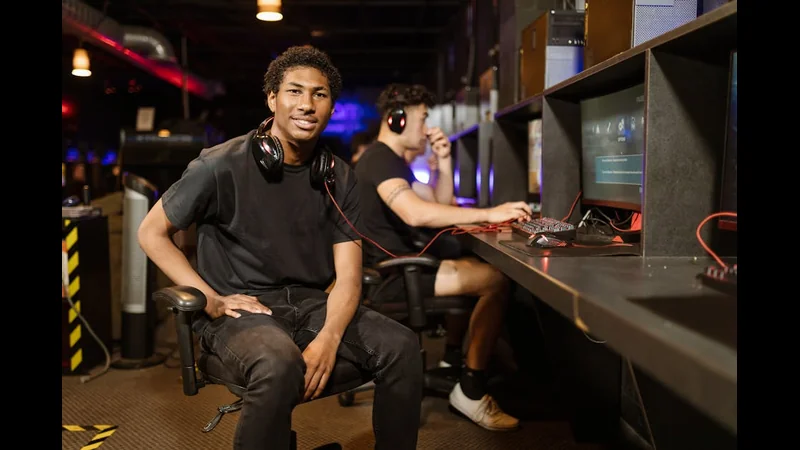
Optimize Your Setup for Consistency
Mechanical skill improves faster when hardware and settings are consistent. Poor ergonomics or unstable performance create noise that slows learning.
Key setup optimizations:
- Stable frame rate (FPS consistency over max FPS)
- Low input lag
- Comfortable sensitivity settings
- Ergonomic posture and desk setup
- Reliable internet connection
According to McKinsey’s esports performance analysis (Kaynak: https://mckinsey.com
), players who reduce technical friction show faster reaction-time improvement than those who constantly change settings.
Once optimized, do not constantly tweak. Consistency allows muscle memory to form.
Train Mechanics Separately From Matches
Matches combine many skills at once, making targeted improvement difficult. High-level players isolate mechanics in controlled environments.
Examples include:
- Aim trainers
- Practice modes
- Custom games
- Sandbox environments
- Training rooms
Mechanical drills remove decision pressure and allow focused repetition. This accelerates motor learning and builds confidence.
Stanford motor learning research shows that separating mechanics from strategy improves skill transfer back into real matches.
Learn From Better Players—But Actively
Watching skilled players can accelerate learning, but only if done actively. Passive viewing entertains but rarely improves performance.
When studying better players:
- Pause and predict their decisions
- Ask why they positioned a certain way
- Note timing choices, not just outcomes
- Focus on decision logic, not flashy mechanics
Apply one concept at a time in your own games. Trying to copy everything at once leads to overload.
Mental Discipline: The Hidden Accelerator
- Mental consistency determines how quickly skills consolidate. Tilt
- frustration
- ego block learning by shifting focus away from process.
Fast-improving players:
- Accept mistakes as data
- Stop playing when focus drops
- Separate identity from rank
- Measure progress by execution, not wins
Sports psychology research from Stanford (Kaynak: https://stanford.edu
) shows that emotional regulation directly improves learning speed by reducing cognitive interference.
Short Sessions Beat Long Grinds
Contrary to popular belief, marathon sessions slow improvement. Fatigue reduces learning efficiency and reinforces bad habits.
Optimal structure:
- Warm-up (5–10 minutes)
- Focused practice (30–60 minutes)
- Matches with intention
- Short review
- Stop before exhaustion
Sleep and rest are critical. Memory consolidation happens during rest, not during play.
Genre-Specific Acceleration Tips

FPS Games
Focus on crosshair placement
Train tracking and flicks separately
Learn common angles and timings
MOBAs
Improve map awareness first
Learn wave and resource management
Track cooldowns and objectives
Fighting Games
Master spacing and defense
Practice combos in isolation
Learn frame advantage concepts
Strategy Games
Study build orders
Review losses analytically
Focus on information advantage
FAQ
- How long does it take to improve significantly?
- With deliberate practice, noticeable improvement can occur in weeks, not months.
Is talent necessary to improve fast?
No—structured practice matters more than innate talent.
Should I copy pro settings?
Only as a starting point; comfort and consistency matter more.
Does playing ranked help improvement?
Only if combined with analysis and intentional practice.
Is coaching worth it?
Yes—external feedback accelerates learning dramatically.
Conclusion
Improving gaming skills fast is not about grinding endlessly or chasing flashy techniques. It is about focused diagnosis, deliberate practice, consistency, and mental discipline. By isolating weaknesses, mastering fundamentals, optimizing your environment, and learning actively, players can compress months of improvement into weeks. Gaming skill is a performance system—and like any system, it improves fastest when trained intelligently. With the right approach, rapid and sustainable improvement is not only possible, but predictable.
Frequently Asked Questions
When reviewing gameplay, focus on:
Why you died (not how)What information you missedWhether your decision was correct with available dataPatterns of repeated errors Avoid blaming teammates or RNG. Improvement comes from controllable factors. Top players often review losses more than wins because mistakes are easier to identify when outcomes are negative. Optimize Your Setup for Consistency Mechanical skill improves faster when hardware and settings are consistent.
When studying better players:
Pause and predict their decisionsAsk why they positioned a certain wayNote timing choices, not just outcomesFocus on decision logic, not flashy mechanics Apply one concept at a time in your own games. Trying to copy everything at once leads to overload. Mental Discipline: The Hidden Accelerator Mental consistency determines how quickly skills consolidate. Tilt, frustration, and ego block learning by shifting focus away from process.