Why Esports Athletes Train Like Real Athletes

At first glance, esports and traditional sports appear worlds apart. One is played on digital battlefields, the other on physical fields and courts. Yet behind the screens, elite esports athletes follow training regimens that increasingly resemble those of professional footballers, basketball players, and Olympic competitors. Structured practice schedules, physical conditioning, nutrition plans, mental coaching, performance analytics, and recovery protocols are now standard across top-tier esports organizations.
This is not a coincidence. Competitive gaming has evolved into a high-performance discipline where marginal gains in reaction time, decision-making, and endurance can determine the outcome of multimillion-dollar tournaments. This article explains why esports athletes train like real athletes, what their training actually looks like, and how science, physiology, and psychology have reshaped competitive gaming.
Esports Performance Is Not Just “Playing Games”
The misconception that esports professionals simply “play games all day” ignores the cognitive and physical demands of elite competition. Top-level esports requires sustained attention, rapid motor responses, emotional regulation, and strategic thinking under pressure.
In a single high-stakes match, an esports athlete may perform:
- Hundreds of precise inputs per minute
- Continuous visual tracking at high frame rates
- Split-second decision-making under uncertainty
- Team communication with zero margin for error
Studies from Stanford’s Cognitive and Systems Neuroscience Lab (Kaynak: https://stanford.edu
) show that professional esports players operate at reaction times comparable to fighter pilots and elite table tennis athletes. These demands necessitate structured training far beyond casual gameplay.
- Reaction Time
- Precision
- Neuromuscular Training
Reaction time is one of the most critical performance metrics in esports. In games like Counter-Strike 2, Valorant, and League of Legends, milliseconds matter. Faster reactions translate directly into competitive advantage.
To improve reaction speed and motor precision, esports athletes train:
- Hand–eye coordination drills
- Fine motor control exercises
- High-frequency input repetition
- Aim-training software and custom scenarios
Neuromuscular efficiency—how quickly the brain communicates with muscles—can be trained just like in traditional sports. Research from MIT’s Department of Brain and Cognitive Sciences (Kaynak: https://mit.edu
) confirms that repetitive, targeted motor tasks strengthen neural pathways, improving both speed and consistency over time.
- Physical Fitness: Endurance
- Posture
- Injury Prevention
While esports is not physically explosive in the traditional sense, physical fitness plays a crucial role in long-term performance. Matches can last hours, tournaments span multiple days, and poor physical conditioning leads to fatigue, reduced focus, and injury risk.
Common physical training goals include:
- Improving cardiovascular endurance
- Strengthening core and postural muscles
- Preventing repetitive strain injuries
- Reducing neck, shoulder, and wrist pain
Top esports teams now employ fitness coaches who design programs similar to those used by office-based elite professionals and precision athletes. Exercises often focus on flexibility, stability, and muscular balance rather than raw strength.
IEEE ergonomics research (Kaynak: https://ieee.org
) indicates that posture-related fatigue significantly degrades reaction time and accuracy during prolonged computer-based tasks—directly impacting esports performance.
Vision Training: Seeing Faster and More Accurately
Vision is arguably the most important sense in esports. Players must track fast-moving targets, detect subtle visual cues, and maintain focus across high-refresh-rate displays.
Esports vision training includes:
- Peripheral awareness exercises
- Eye-tracking drills
- Contrast sensitivity training
- Focus-shifting routines
- Blue-light exposure management
Some teams work with sports vision specialists to improve visual processing speed and reduce eye fatigue.
Nature Human Behaviour studies (Kaynak: https://nature.com
) show that trained visual attention can significantly improve performance in tasks involving rapid spatial judgment—exactly the skills required in competitive gaming.

Mental Training and Psychological Resilience
Mental performance separates good players from champions. Esports competition involves intense pressure, public scrutiny, and rapid emotional swings. Losing focus for even a moment can cost a match.
To address this, teams invest heavily in sports psychology. Mental training focuses on:
Stress management
Emotional regulation
Focus consistency
Confidence under pressure
Team communication dynamics
Athletes practice mindfulness, breathing techniques, visualization, and cognitive reframing—tools commonly used by Olympic athletes.
According to research from Stanford’s Performance Psychology Group (Kaynak: https://stanford.edu
), mental resilience training improves decision-making accuracy under stress by reducing cognitive overload.
Structured Practice and Periodization
Esports training is no longer random or unstructured. Like traditional sports, it follows periodized schedules designed to optimize performance while avoiding burnout.
A typical professional esports training day may include:
- Individual mechanical practice
- Team strategy sessions
- Match review and analysis
- Physical conditioning
- Mental skills training
- Rest and recovery
Training intensity fluctuates depending on tournament schedules. Pre-competition phases emphasize strategy and scrimmages, while post-competition phases focus on recovery and skill refinement.
McKinsey’s analysis of high-performance digital teams (Kaynak: https://mckinsey.com
) highlights structured training and recovery as key factors in sustaining long-term competitive output in cognitively demanding professions.
Nutrition and Cognitive Fuel
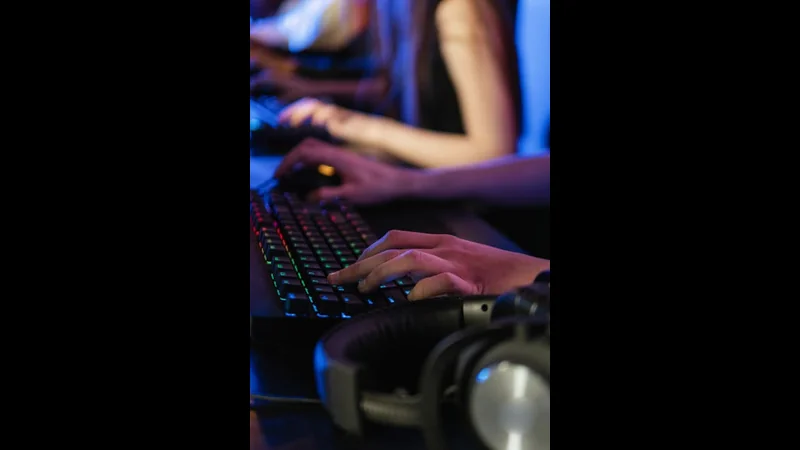
Nutrition directly affects cognitive performance, reaction time, and endurance. Esports athletes now work with nutritionists to optimize diet for sustained mental clarity rather than physical bulk.
Key nutritional priorities include:
- Stable blood sugar levels
- Adequate hydration
- Omega-3 fatty acids for brain health
- Controlled caffeine intake
- Avoiding energy crashes
- Poor nutrition leads to inconsistent focus
- slower reactions
- increased fatigue. Teams increasingly treat nutrition as a competitive variable
- not a lifestyle afterthought.
- Data
- Analytics
- Performance Metrics
Modern esports training is deeply data-driven. Coaches and analysts track:
- Reaction time trends
- Input accuracy
- Heatmaps of player movement
- Decision timing
- Communication patterns
- Stress indicators
These metrics allow teams to identify weaknesses, optimize strategies, and tailor training to individual players. This mirrors the analytics revolution in traditional sports, where performance data guides coaching decisions.
- Recovery
- Sleep
- Longevity
Burnout is one of the biggest threats in esports careers. Without proper recovery, players experience declining performance, motivation loss, and shortened careers.
Recovery strategies include:
- Scheduled rest days
- Sleep optimization
- Physical therapy
- Mental decompression
- Reduced screen exposure outside training
Studies from the University of Queensland’s Sports Science Department (Kaynak: https://uq.edu.au
) show that cognitive recovery is just as important as physical recovery in high-performance digital tasks.
Why Esports Training Will Keep Evolving
- As prize pools grow and competition intensifies
- esports training will become even more professionalized. AI-driven analytics
- biometric monitoring
- adaptive training software
- personalized coaching models are already emerging.
The gap between casual gaming and elite esports is widening—not because of talent alone, but because of preparation. Esports athletes train like real athletes because the demands of competition require it.
FAQ
- Do esports athletes need to be physically fit?
- Yes—fitness improves endurance, posture, and focus.
How many hours do esports pros train?
Typically 6–10 hours per day, including structured practice and analysis.
Is mental training really important?
Yes—mental resilience directly impacts decision-making under pressure.
Do esports careers have burnout risks?
Very high without proper recovery and support systems.
Are esports training methods still evolving?
Yes—rapidly, with increasing use of data and AI.
Conclusion
Esports has outgrown its stereotype as a purely recreational activity. At the highest level, competitive gaming is a demanding performance discipline that requires physical conditioning, mental resilience, structured practice, and scientific optimization. Esports athletes train like real athletes because they are real athletes—operating in a different arena, but facing equally unforgiving performance margins. As esports continues to professionalize, the parallels with traditional sports will only deepen, reshaping how the world defines athletic excellence in the digital age.