NVIDIA’s Legendary TITAN Ada Has Surfaced — A Glimpse Into the GPU That Was Never Meant to Exist

For years, it existed only as a rumor inside enthusiast forums and engineering circles. A graphics card so extreme that it allegedly broke NVIDIA’s own product segmentation rules. Now, the legendary TITAN Ada has resurfaced — and with it, a rare look into how far NVIDIA was willing to push the Ada Lovelace architecture behind closed doors.
This is not a product launch.
This is a post-mortem of a GPU that was too powerful for the market it was built for.
The Return of a Ghost GPU
The TITAN brand has historically represented NVIDIA’s absolute ceiling — cards that blur the line between consumer gaming hardware and professional compute accelerators.
Unlike GeForce RTX products, TITAN GPUs were never about price-to-performance. They were about technical dominance.
TITAN Ada follows that lineage — but with one crucial difference:
It was never officially released.
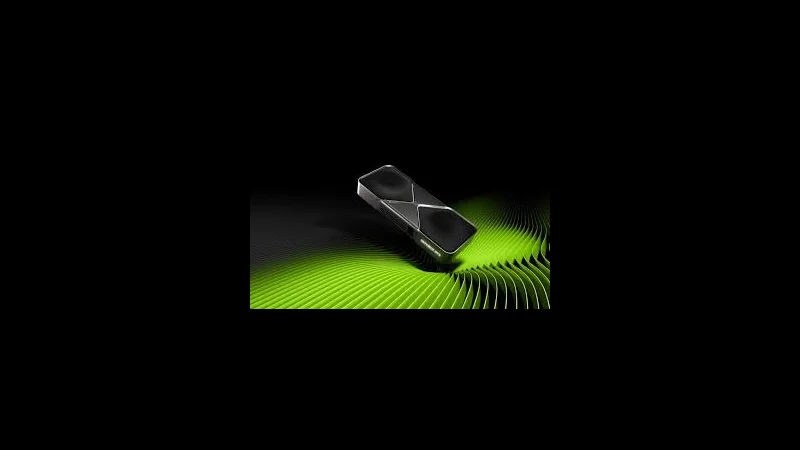
Recent physical sightings and technical documentation have confirmed that TITAN Ada was not a concept sketch or early engineering sample. It was a nearly production-ready card, complete with a finalized PCB, cooling solution, and power delivery system.
In other words, this GPU was real — and intentionally withheld.
Technical Specifications: Pushing Ada Lovelace to the Edge
Based on verified hardware analysis, TITAN Ada represents the maximum theoretical expression of the Ada Lovelace architecture.
Key Specifications
18,432 CUDA cores — surpassing even RTX 4090 configurations
48 GB GDDR6X memory — double the VRAM of flagship gaming cards
Dual 16-pin (12VHPWR) power connectors

Estimated power envelope approaching 900W
Quad-slot cooling solution with extreme thermal mass
90-degree rotated PCB layout designed for unconventional airflow and power routing
This was not a gaming card in the traditional sense.
It was a hybrid compute monster, capable of high-resolution rendering, AI workloads, large-scale simulations, and professional visualization — all on a single consumer-class PCB.
Why TITAN Ada Was Never Released
The obvious question is also the most revealing one:
Why would NVIDIA build such a card and never sell it?
Product Segmentation Collapse
- TITAN Ada would have directly overlapped — and likely eclipsed — both:
- GeForce RTX flagship models
- Certain professional RTX workstation cards
Releasing it would have blurred NVIDIA’s carefully structured market tiers, cannibalizing higher-margin enterprise and workstation products.
Power and Practicality Constraints
- A GPU drawing close to 900W presents:
- PSU compatibility challenges
- Thermal constraints for standard PC cases
- Regulatory and safety complications in consumer markets
This card demanded infrastructure most users simply do not have.
Strategic Timing
- TITAN Ada emerged at a moment when NVIDIA’s focus was shifting rapidly toward:
- AI accelerators
- Data-center GPUs
- Enterprise-grade compute platforms
From a business perspective, the card was a technical triumph — but a strategic liability.
What TITAN Ada Reveals About NVIDIA’s Engineering Philosophy
Perhaps the most important takeaway is not the card itself, but what its existence implies.
TITAN Ada proves that NVIDIA routinely develops hardware far beyond what it ever intends to sell. These internal projects serve three purposes:
Stress-testing architectural limits
Informing future flagship designs
Advancing compute and AI research internally
In this sense, TITAN Ada is less a cancelled product and more a rolling laboratory — a stepping stone toward future RTX and data-center architectures.
Context: From Gaming GPUs to Compute Supremacy
The resurfacing of TITAN Ada coincides with a broader industry shift.
Modern GPUs are no longer designed primarily for games. Gaming has become just one workload among many:
AI training and inference
Neural rendering
Scientific computing
Large-scale simulation
TITAN Ada sits squarely at that intersection — a card born in the consumer ecosystem but shaped by compute-first priorities.
Could TITAN Ever Return?
A full commercial return of the TITAN brand appears increasingly unlikely.
NVIDIA’s roadmap suggests a clearer separation:
- GeForce for gaming
- RTX Pro / Data Center for compute and AI
However, TITAN Ada’s existence leaves one door open:
future ultra-enthusiast GPUs may inherit its DNA — just without the TITAN name.
Conclusion: A GPU That Was Too Powerful for Its Own Era
TITAN Ada is not important because it exists.
It is important because it did not need to exist — yet was built anyway.
It represents the extreme edge of GPU engineering, where performance, power, and practicality collide. A reminder that the hardware shaping tomorrow’s AI and simulation workloads often begins as a forbidden experiment.
TITAN Ada will never sit on store shelves.
But its influence is already embedded in the GPUs that will define the next generation.