Electric Vehicle Software Is Becoming a Bigger Differentiator Than Hardware

For much of automotive history, competitive advantage was built on tangible elements: engine displacement, chassis tuning, suspension geometry, and manufacturing quality. In the electric vehicle era, that hierarchy is rapidly changing. While battery capacity and motor efficiency still matter, they are no longer the primary factors separating one EV from another. Software has emerged as the most decisive differentiator—shaping performance, user experience, safety, and long-term value in ways hardware alone no longer can.
This shift is subtle but profound. Two electric vehicles with similar batteries, motors, and charging speeds can deliver dramatically different ownership experiences depending on how their software is designed, updated, and integrated. As EV hardware becomes increasingly standardized, software is where automakers now compete most aggressively.
One reason for this change is hardware convergence. Battery cells, electric motors, and power electronics are improving rapidly, but they are also becoming more commoditized. Suppliers serve multiple manufacturers, and efficiency gains apply broadly across the industry. While there are still differences in packaging and thermal management, the performance gap created purely by hardware is narrowing. Software, by contrast, remains highly customizable and proprietary.
Electric vehicles are inherently software-driven machines. Unlike internal combustion cars, where mechanical systems dominate behavior, EVs rely on software to control nearly every aspect of operation. Throttle response, regenerative braking strength, traction control, battery thermal management, charging curves, and energy efficiency are all governed by code. This gives manufacturers enormous flexibility to define how a vehicle feels and performs without changing physical components.
Performance is a clear example. Acceleration in an EV is not limited by engine mechanics but by how software manages torque delivery. Manufacturers can tune responsiveness, smoothness, and traction characteristics through software alone. In some cases, automakers have improved acceleration times, extended driving range, or optimized energy consumption via over-the-air updates—without altering motors or batteries. This would be unthinkable in the combustion era.
Battery behavior is another major differentiator driven by software. Battery management systems control charging speed, thermal limits, degradation mitigation, and energy availability. Two EVs using similar battery chemistry can exhibit very different real-world range, charging consistency, and long-term battery health depending on software strategy. Intelligent battery algorithms increasingly separate premium EVs from basic ones.
User experience is where software dominance becomes most visible. Infotainment systems, digital dashboards, voice assistants, navigation, and mobile app integration define daily interaction with the vehicle. Laggy interfaces, poor update support, or confusing controls can undermine even the best hardware. Conversely, smooth interfaces, frequent improvements, and intuitive design elevate perceived quality. For many buyers, the software experience now outweighs traditional measures like horsepower or interior materials.
Over-the-air updates have amplified this effect. Vehicles are no longer frozen in time at delivery. Software-centric EVs can improve continuously, gaining new features, refined driving behavior, enhanced safety logic, and better efficiency years after purchase. This creates a widening gap between manufacturers that invest heavily in software platforms and those that treat updates as an afterthought.
Advanced driver assistance systems further highlight the software divide. Cameras, radar, and sensors may be similar across vehicles, but perception algorithms, decision logic, and system integration vary widely. The quality of lane keeping, adaptive cruise control, and collision avoidance depends far more on software maturity than sensor count. As autonomy evolves incrementally, software quality increasingly defines safety and trust.
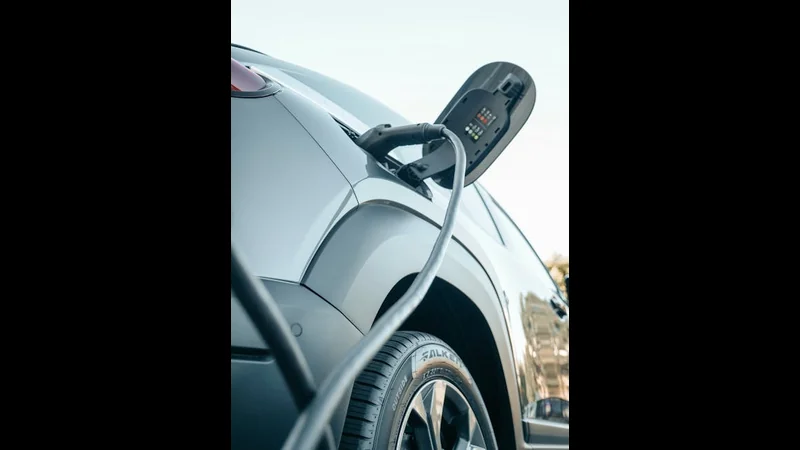
Charging experience is also shaped more by software than hardware. Route planning with charging optimization, preconditioning logic, charger compatibility management, and real-time charging feedback all rely on software intelligence. Two EVs using the same fast charger can deliver very different charging experiences based on how effectively their software prepares and manages the battery.
From a business perspective, software enables new value creation models. Feature unlocks, performance upgrades, enhanced driver assistance, and energy services can be delivered digitally. While controversial, these capabilities reflect a broader shift: value is no longer embedded entirely in hardware at purchase, but distributed over time through software. Automakers that control their software stack gain long-term customer engagement and recurring revenue opportunities.
This transformation also changes development culture. Software-first EV companies adopt continuous improvement models, rapid iteration, and data-driven optimization. Vehicles generate real-world usage data that feeds back into development, improving algorithms across entire fleets. Traditional automakers transitioning to this mindset face organizational challenges, but those that succeed gain significant competitive advantages.
Importantly, software differentiation affects longevity. An EV with strong hardware but weak software support can feel outdated within a few years. Conversely, a vehicle with modest hardware but excellent software can remain competitive through updates and refinements. In this sense, software determines not only how an EV performs today, but how well it ages.
Cybersecurity and reliability add another layer. As software becomes central, stability and protection become critical differentiators. Vehicles that deliver frequent updates but suffer from bugs or security issues erode trust quickly. Mature software organizations prioritize validation, redundancy, and secure deployment—qualities that increasingly influence brand reputation.
The growing role of software does not mean hardware no longer matters. Batteries, motors, and manufacturing quality remain foundational. But they are no longer sufficient on their own. Hardware sets the ceiling; software determines how close a vehicle comes to reaching it.
As electric vehicles mature, the competitive landscape increasingly resembles the technology sector rather than traditional automotive manufacturing. Platforms, ecosystems, update cadence, and user experience matter as much as physical specifications. Buyers may still compare range and charging speed, but long-term satisfaction is shaped by how intelligently software evolves.
Electric vehicle differentiation is entering a new phase. The question is no longer just how far an EV can drive or how fast it can accelerate, but how well its software adapts, improves, and integrates into a connected world. In this environment, software is not an accessory—it is the defining feature.

The EVs that stand out over the next decade will not necessarily be those with the largest batteries or most powerful motors. They will be the ones whose software turns hardware potential into consistently superior real-world experiences. In the electric era, code is becoming the true engine of differentiation.
FAQ
Why is software more important in EVs than in gas cars?
Because EV behavior—performance, efficiency, charging, and safety—is primarily controlled by software.
- Can software really improve EV performance?
- Yes. Many improvements to range, acceleration, and efficiency are delivered through updates.
Does this mean EV hardware doesn’t matter anymore?
No. Hardware sets limits, but software determines how effectively it is used.
Are OTA updates essential for modern EVs?
Increasingly yes. They allow vehicles to improve and stay competitive over time.
Do all automakers control their own EV software?
No. Many are transitioning away from supplier-dependent models toward in-house platforms.
Will software subscriptions become common?
Some features already are, though consumer acceptance varies.
Does better software affect resale value?
Yes. Vehicles with strong software support tend to age better and retain value.
Conclusion
As electric vehicles mature, software is overtaking hardware as the primary source of differentiation. With hardware capabilities converging across the industry, software now defines performance, efficiency, safety, and user experience. Over-the-air updates, intelligent battery management, and refined driver assistance systems ensure that EVs are no longer static products, but evolving platforms. In the next phase of electric mobility, the most competitive vehicles will not be those with the most hardware—but those with the smartest software.