How Fast Charging Stations Work

Fast-charging stations have become one of the most critical pillars supporting the global transition to electric mobility. As EV adoption grows, drivers increasingly rely on high-power charging networks to reduce downtime and enable long-distance travel. These stations operate far differently from home chargers, using advanced power electronics, cooling systems, and communication protocols to deliver rapid, safe, and efficient energy transfer. Understanding how fast charging stations work provides insight into the engineering complexities behind the infrastructure that powers the future of transportation.
Fast charging—often called DC fast charging—bypasses a vehicle’s onboard charger and supplies high-voltage direct current directly to the battery pack. Whereas home chargers use alternating current (AC) converted inside the vehicle, fast chargers handle conversion externally. This allows them to deliver significantly more power, ranging from 50 kW in early systems to 350 kW or more in state-of-the-art ultra-fast stations. By offloading the conversion process to large, grid-connected power cabinets, fast chargers overcome the limitations of compact onboard chargers.
The charging process begins the moment a driver plugs in. Modern stations use communication standards such as CCS (Combined Charging System), CHAdeMO, or Tesla’s NACS to establish a secure digital handshake between the charger and the vehicle. During this handshake, the car and charger exchange information: battery temperature, current state of charge, voltage limits, and maximum allowable charging rate. This ensures that charging occurs safely and optimally without damaging the battery.
Once communication is established, the station regulates power delivery through sophisticated control algorithms. These algorithms continuously monitor the battery’s condition and adjust voltage and current in real time. At low states of charge, batteries can accept high power levels, enabling rapid energy intake. This is why EVs often charge fastest between 10% and 40%. As the battery approaches higher levels of charge, internal resistance increases, heater levels change, and the risk of lithium plating rises. To prevent damage, the system gradually tapers the charging rate. This tapering effect is a natural aspect of lithium-ion chemistry rather than a limitation of the charger itself.
Behind the scenes, fast-charging stations rely on robust electrical infrastructure. High-power chargers draw significant energy from the grid, often requiring transformers, switchgear, and dedicated distribution lines. Stations delivering 150 kW or more typically incorporate power cabinets with multiple modules that can dynamically allocate energy to more than one vehicle. This load balancing allows the station to maximize utilization, sharing power intelligently based on each EV’s charging curve and demand.
Thermal management is a critical component of fast charging. High currents generate heat both in the charger cable and inside the vehicle’s battery pack. To keep temperatures within safe limits, many fast-charging cables use liquid cooling systems that circulate coolant around conductors, allowing for thinner cables that remain flexible while carrying large electrical loads. Similarly, vehicles activate battery cooling or heating systems to maintain optimal charging conditions. This interplay between charger cooling and battery thermal management is essential for achieving high charge rates without compromising safety.
Another layer of complexity comes from the software used to manage charging sessions. Many stations connect to cloud-based platforms that handle authentication, billing, fault detection, and remote monitoring. These platforms allow operators to diagnose issues, manage energy distribution, and integrate renewable power sources. Some networks even use predictive analytics to anticipate demand patterns and optimize charging availability.
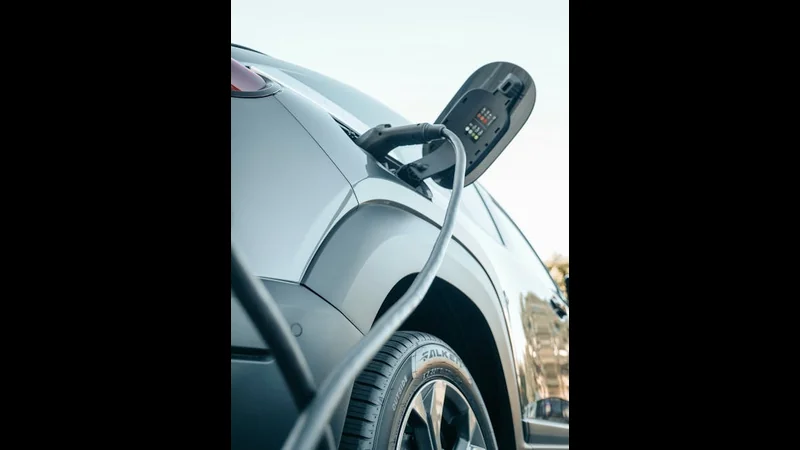
The pricing models for fast charging vary. Some providers bill by the kilowatt-hour, while others charge per minute or session. Energy markets, demand charges, and local regulations influence cost structures. Despite being more expensive than home charging, fast charging remains essential for long-distance travel and urban users without access to private charging.
Charging speed also depends heavily on the vehicle itself. Not all EVs support ultra-fast charging; maximum rates vary from 50 kW to more than 300 kW. Factors such as battery chemistry, thermal design, and manufacturer charging protocols determine how quickly a specific car can charge. This is why two EVs plugged into the same station may charge at completely different speeds. The charger can only deliver what the car is engineered to accept.
The charging curve—a graphical representation of power delivered over time—provides valuable insight into how fast charging works. EVs typically follow a pattern: a rapid power ramp-up at the beginning, a sustained peak period, and then a gradual taper. Manufacturers design these curves to maximize convenience while protecting battery health. Research from organizations such as the U.S. Department of Energy and IEEE highlights ongoing advancements to extend peak charging windows, improve heat dissipation, and shorten charging times overall.
As fast-charging technology evolves, new innovations are emerging. High-power 800-volt architectures allow for faster charging with lower current, reducing heat and improving efficiency. Solid-state batteries, expected to enter the market in coming years, promise even higher charging speeds with improved safety. Wireless fast charging, though still experimental, has shown potential for automated, cable-free energy transfer using resonant magnetic fields. Moreover, integration with renewable energy and energy storage systems allows stations to reduce peak grid demand and operate more sustainably.
Grid impact is another important consideration. Fast chargers place significant loads on electrical networks, especially when multiple high-power chargers operate simultaneously. Utilities and charging networks are increasingly adopting smart-grid technologies such as energy storage buffers, demand response systems, and dynamic load management to stabilize the grid. These measures ensure reliable charging without overwhelming the electrical infrastructure.
Fast charging stations also play a vital role in the broader EV ecosystem. They enable confidence in long-distance travel, minimize downtime for commercial fleets, and support rapid turnover for ride-hailing operators. As adoption increases, charging networks are expanding along major highways, retail centers, workplaces, and urban hubs. Public-private partnerships continue to accelerate deployment, with governments incentivizing infrastructure investments and standardization.
In essence, fast-charging stations represent a fusion of electrical engineering, battery science, and intelligent software systems. They are far more than high-power outlets—they are dynamic, adaptive, safety-driven energy platforms optimized for speed and reliability. Understanding how they work reveals not only the sophistication of EV technology but also the massive infrastructure innovation required to support the future of transportation.
FAQ
Why do EVs slow down charging at higher battery levels?
Because internal resistance increases as a battery fills, requiring the charger to taper power to protect cell health.
- Do all EVs support fast charging?
- No. Maximum charging rates vary by model, battery design, and manufacturer limits.
What is the difference between Level 2 and DC fast charging?
Level 2 uses AC power and the vehicle’s onboard charger, while DC fast charging supplies high-voltage DC directly to the battery.
Why are fast-charging cables so thick?
They carry high currents and often use liquid cooling to prevent overheating.
Does fast charging damage EV batteries?
Occasional fast charging is safe, but repeated high-power charging can accelerate degradation slightly over time.
Can fast chargers work with renewable energy?
Yes. Many stations integrate solar panels or energy storage to reduce grid demand.
How long does fast charging take?
Depending on the EV, 15–30 minutes typically restores 60–80% of battery capacity.
Conclusion
Fast-charging stations are the backbone of modern electric mobility, enabling ultra-rapid energy delivery through sophisticated hardware, smart communication systems, and advanced battery management. By bypassing onboard chargers and using high-power DC current, these stations dramatically reduce charging time and enhance long-distance usability. As technology advances—through 800-volt systems, better cooling, and next-generation batteries—fast charging will become even faster, safer, and more efficient. This infrastructure is essential for scaling EV adoption and creating a seamless, reliable charging experience for drivers worldwide.