The Difference Between Front-End and Back-End

When people first step into the world of software development, one of the most common—and surprisingly confusing—questions they ask is: What is the difference between front-end and back-end development? At a glance, the terms feel straightforward, yet the deeper you look, the more moving parts you discover. From user interfaces and APIs to servers, databases, rendering engines, and security protocols, the web stack is a complex ecosystem. In this Q&A-style guide, we break it down in the most human, practical, and intuitive way possible while pointing to trusted academic and industry sources along the way.
- Many beginners start with the fundamental question: What exactly is front-end development?
- Source (MDN Web Docs): https://developer.mozilla.org
- Then people ask: So what is back-end development?
- Source: https://cs.stanford.edu
With the basics covered, beginners often wonder: If the front-end is what users see, does that mean it’s easier?
Not necessarily. While front-end developers work with visual interfaces, their tools have become incredibly sophisticated. They must understand accessibility standards, responsive design, performance optimization, browser quirks, asynchronous JavaScript behavior, and frameworks like React, Vue, and Svelte. MIT’s OpenCourseWare materials emphasize that front-end engineering requires a deep understanding of how browsers interpret and render content.
Source: https://ocw.mit.edu
- A related question pops up quickly: What does the back-end actually do when I click something?
- Source: https://nsf.gov
Once the flow is understood, beginners ask: What languages are used in front-end development?
Front-end is primarily built with:
– HTML (structure)
– CSS (styling)
– JavaScript (functionality)
Frameworks and libraries expand capabilities, such as React, Angular, and Vue. W3C (World Wide Web Consortium), the main standards body for the web, maintains the specifications for these technologies.
Source: https://w3.org
- Then comes the counterpart: What languages are used in back-end development?
- Back-end languages vary widely:
- – Python (Django, Flask, FastAPI)
- – JavaScript / Node.js
- – Java (Spring)
- – C# (ASP.NET)
- – Go
- – Ruby on Rails
- – PHP (Laravel)
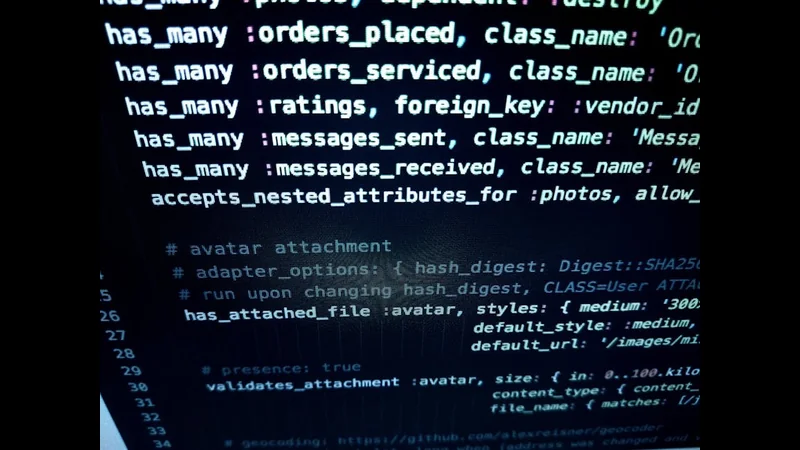
These languages communicate with databases, handle logic, and respond to client requests. The Association for Computing Machinery (ACM) identifies these languages as essential for scalable backend architectures.
Source: https://acm.org
- Another question arises: Where is data actually stored?
- Source: https://harvard.edu
Beginners often ask: How do the front-end and back-end talk to each other?
They communicate through APIs—application programming interfaces. The front-end sends an HTTP request to an API endpoint, the back-end processes the request, and the API delivers a response. This is known as the client-server model, a structure still taught in foundational courses at Carnegie Mellon University.
Source: https://cs.cmu.edu
- One curiosity is: Which part controls user experience?
- Both layers contribute:
- – The front-end controls visual design, interaction speed, and usability.
- – The back-end controls data accuracy, speed of responses, authentication, and business logic.
A slow back-end makes the front-end feel slow—even if the interface is beautifully designed.
Another common question: What role does security play?
Back-end security is crucial. It handles:
– password hashing
– access control
– database security
– input validation
– encryption
– API authentication
Front-end security mostly prevents attacks like XSS (Cross-Site Scripting). According to OWASP, most high-risk vulnerabilities originate in insecure back-end logic.
Source: https://owasp.org
People then ask: Can someone be both a front-end and back-end developer?
Absolutely. That role is called full-stack development. A full-stack developer understands how to build user interfaces and how to design server logic, manage databases, and connect APIs. Universities increasingly teach full-stack models due to rising demand for versatile engineers.
Another interesting question: Why do companies separate front-end and back-end roles?
Because each domain is deep and complex. Front-end developers must master performance optimization, accessibility, and responsive layout systems. Back-end developers must focus on scalability, architecture patterns, security, and data modeling. Large teams specialize to improve efficiency and maintainability.

Next, users often ask: How do modern frameworks blur the line between front-end and back-end?
Tools like Next.js, Nuxt.js, Remix, and SvelteKit enable full-stack development within a single framework. They allow developers to write server logic and front-end code in the same ecosystem. This reduces complexity and makes apps faster thanks to server-side rendering and edge computing.
Then comes an important question: Which career path should a beginner choose?
It depends on personality and interests. Choose front-end if you enjoy design, UI, UX, animations, and visual creation. Choose back-end if you enjoy logic, data, problem-solving, and system architecture. Both fields are in high demand, and both offer strong career growth.
Finally, a deeply human question: Which one is more important?
Neither. A product collapses without both layers working together. Beautiful UI cannot compensate for a failing server, and a powerful back-end is useless without a usable interface. The web is a partnership. Success depends on harmony between what users see and what systems do behind the scenes.
⭐ FAQ
Is front-end easier than back-end?
Not necessarily—each has unique complexity and skill requirements.
Do full-stack developers replace front-end and back-end roles?
No. They complement teams by understanding the entire workflow.
Does every website need both sides?
Yes. Even static pages rely on back-end infrastructure for hosting.
Which side handles databases?
Back-end systems manage databases and long-term data storage.
Are front-end developers responsible for performance?
Front-end performance matters greatly, but back-end latency also impacts it.
⭐ Conclusion
Front-end and back-end development represent two halves of the same powerful system. One focuses on the user experience; the other powers the data, logic, and infrastructure required to make applications work. By understanding how these layers collaborate—through APIs, databases, servers, and rendering engines—developers and tech enthusiasts gain insight into the foundations of modern software. Whether you choose design-driven front-end development or logic-driven back-end engineering, both fields offer endless opportunities to innovate in a rapidly evolving digital world.