Atlas Is Done With Demos — The First Industrial Humanoid Robot Set to Transform Workplaces

Video: Atlas Is Done With Demos — The First Industrial Humanoid Robot Set to Transform Workplaces
For decades, humanoid robots were mainly science fiction or showcase demos — impressive in videos, fascinating at tech expos, but out of reach for real industrial use. Now, that era may be ending. The humanoid robot Atlas — redesigned for industrial autonomy and real-world tasks — is transitioning from research prototype to enterprise-ready worker that could redefine how factories and warehouses operate.
Unveiled publicly at CES 2026, and backed by iterative development spanning years, Atlas is no longer just a platform for balance and motion research. It’s now a highly capable, fully electric humanoid robot designed to perform material handling, assembly, and a range of industrial tasks with minimal supervision, and it may soon be working alongside humans in real production environments.
A Robot Built for Real Work, Not Just Demo Floors
Atlas isn’t a lab oddity anymore. Boston Dynamics, long known for robots that astonish audiences on YouTube, is now positioning Atlas as the world’s first enterprise-grade humanoid robot that doesn’t need highly controlled environments to function.
According to Boston Dynamics, Atlas delivers “unmatched strength and intelligent autonomy” — a bold claim grounded in tangible capabilities: autonomous battery swapping, material handling support, barcode scanning, and deeper integration with industrial systems like MES and WMS.
What sets Atlas apart is not just its humanoid shape, but how it works within human-designed workflows.
Industrial Autonomy Meets AI Task Learning
At the core of Atlas’s mission is autonomy combined with adaptability. Atlas is designed so that when one robot learns a new task, the skill can be deployed across an entire fleet, shrinking training times and enabling rapid scale-up in dynamic environments.
That means a warehouse or factory doesn’t need endless reprogramming for each robot; Atlas learns on the job, adapting to new sequencing, assembly, or machine-tending roles with AI-assisted flexibility.
CEO Robert Playter has emphasized the importance of adaptability, stating that Atlas must be able to learn new tasks within a day or two — a prerequisite for practical industrial use where job requirements constantly evolve.
This kind of learning is not just a convenience — it’s a strategic necessity for robots deployed in fast-paced environments where human coworkers expect machines to handle variability, not just repetition.
Strength, Endurance and Humanoid Presence
Atlas’s specifications are noteworthy:
- More Than a Robot: It’s an Enterprise System
Ability to lift up to 50 kg (110 lbs) on demand.
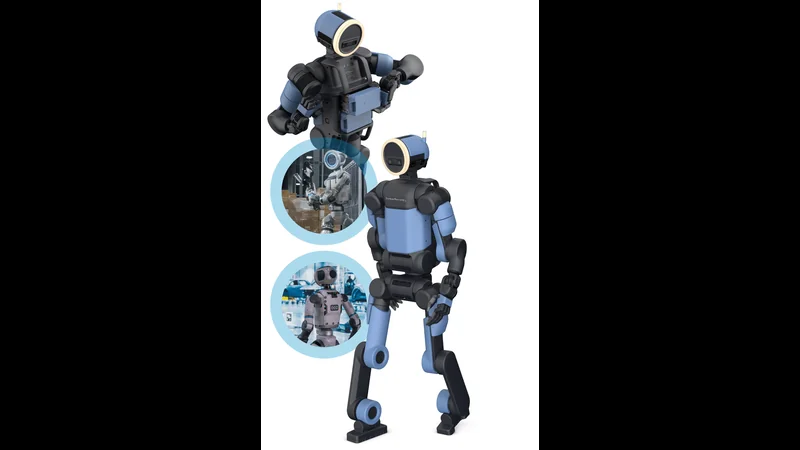
Continuous operation — Atlas independently navigates to a charging station and swaps its battery when needed.
Dynamic autonomy that works with minimal supervision.
Designed to operate within the same spaces humans use, without inexplicable workflow disruptions.
Atlas is also engineered with robustness in mind: it is buildable to withstand a range of industrial environmental conditions and can integrate seamlessly into existing facilities.
This is crucial. Many robots lose utility if they cannot physically operate where humans do — but Atlas’s human-scale design and perception systems mean it moves comfortably in human-centric workplaces.
More Than a Robot: It’s an Enterprise System
Atlas’s intelligence is supported by Orbit™, Boston Dynamics’ centralized platform that ties robots into enterprise workflows. This software acts as a single source of truth for:
performance metrics
task monitoring
fleet coordination
integration with existing business systems
This isn’t about robots taking over isolated tasks — it’s about embedding robotic labor into enterprise digital processes that already govern human workers and automated systems.
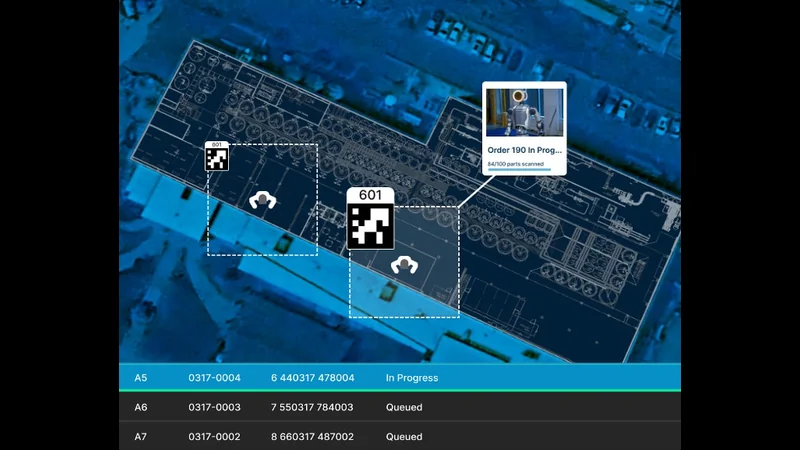
In other words, the future factory is not just humans or machines — it’s a collaborative ecosystem, and Orbit is how the robots speak the same language as the rest of the digital infrastructure.
CES 2026: First Public Glimpse and Real Momentum
- While Atlas has been developed and tested behind the scenes for years
- its public debut at CES 2026 signaled a shift: this is no longer a prototype
- but a system nearing commercial reality.
Judges at CES even recognized Atlas as one of the show’s standout robotics innovations, praising its real-world autonomy over scripted demos—a first for humanoid robots at major industry events.
What Happens Next: Production and Deployment
The roadmap for Atlas is ambitious:
- The Broader Impact: Robots and the Labor Landscape
- Atlas’s rise raises questions that extend beyond factories:
Longer-term plans include expanded use cases, potentially including assembly work and broader supply chain applications.
This staged deployment underscores a vital reality: Atlas is not being rushed into environments it doesn’t yet understand. Its growth is methodical, data-driven, and designed to balance capability with reliability.
The Broader Impact: Robots and the Labor Landscape
Atlas’s rise raises questions that extend beyond factories:
- Conclusion: A Milestone in Industrial Robotics
How will organizations balance the economic benefits of autonomy with workforce displacement concerns?
What safety and ethical guardrails will be needed as robots become co-workers, not distant machines?
Boston Dynamics has consistently framed Atlas as a partner — technology designed to augment human capability rather than render it obsolete — but the conversation around labor displacement, retraining, and economic transition will inevitably intensify as deployments scale.
Conclusion: A Milestone in Industrial Robotics
Atlas is no longer a dream of the future. It’s a working milestone toward a world where humanoid robots autonomously assist in demanding industrial tasks.
With high strength, intelligent autonomy, enterprise integration, and a commercial roadmap that moves from pilots to large-scale deployment, Atlas stands as possibly the most consequential robotic platform of this decade.
Whether it transforms workplaces or reshapes labor economics, Atlas is not just built for our world — it is being built into it.
Latest Articles
Stay updated with the newest tech stories
Trending Now
Most popular articles right now
Most Read
Most viewed articles this week
Editor's Picks
Premium articles selected by our editorial team